


Introduction.
In my world, where I observe how people act in different situations - especially when it comes to acknowledging those who have meant a lot, inspired you, and served as mentors - it is only natural to speak about them and not forget where you came from or those who helped you take steps forward, never taking it for granted. Today, I feel that many people tend to forget this, but Donnie Ramsey, also known as donisdope™, shares these exact values. His mentor is none other than Bobby ‘Fuse’ Green, whom we published an article about back in January. - Luciano brougham
Before we get the interview going Donnie has put together a playlist for us exclusively under the Ninetofive where you can listen to his most favorite & tracks that inspired him during the years of designing.
Fuse has clearly been a huge influence. When you look back, what’s one lesson from him that completely changed the way you approach creativity, or even life?
Fuse is truly a light and a kindred spirit. From our first encounter in 2021 I felt like. I knew him for years. He’s a special individual. We can go months without being in touch and pick up right where we left off. Just knowing him is an incredible blessing. His Guidance has been invaluable and his talent is undeniable.
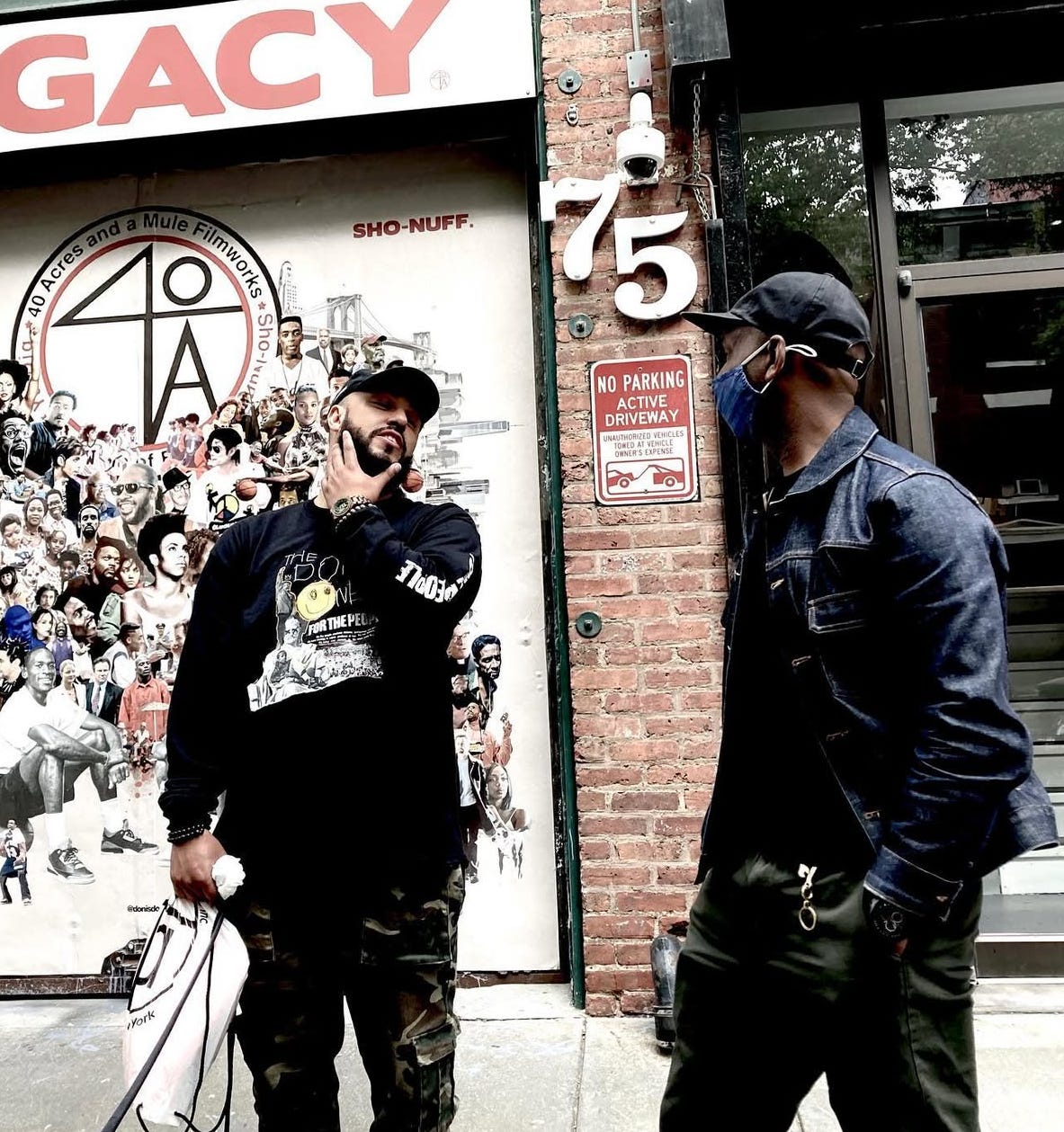
I think beyond him being an incredible visual artist the most poignant thing I’ve learned from Fuse is to just be authentic and genuine, in art and in life.
When you create from the most honest places in your soul it will always resonate. I hope one day I’m able to have the same impact on someone that he has had on me.
Nothing but love and respect.
Chapter. I
You were born in D.C., lived in New York, but spent many of your formative years in Daytona Beach, Florida. How did navigating these three distinct cultural hubs - the political weight of D.C., the hip-hop grit of New York, and the coastal lifestyle of Florida - shape your visual DNA as a kid?
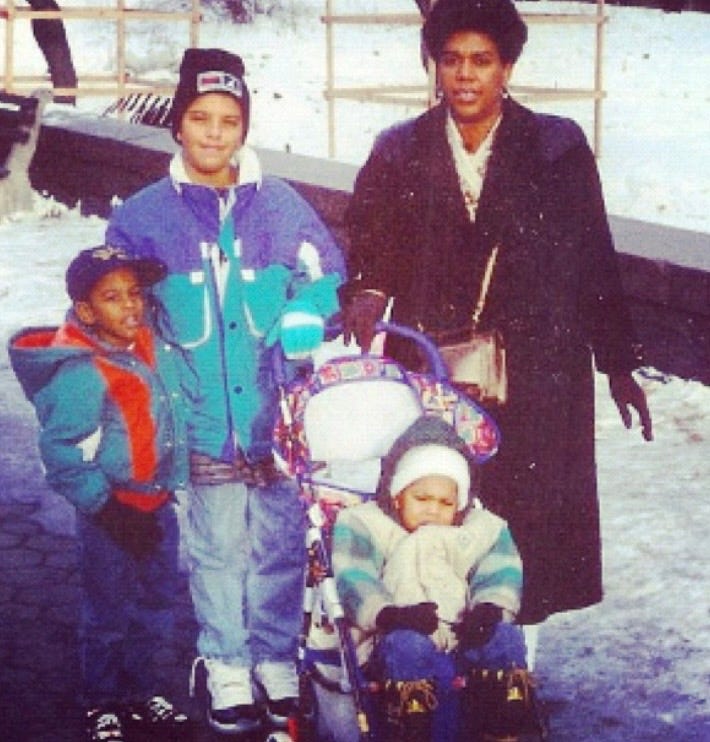
Growing up, I truly did not appreciate what each place really offered because I ONLY wanted to be in New York. I resented the fact that my family migrated down south. I always felt like a fish out of water, but I was fortunate enough to go back up north frequently, often for extended periods of time growing up.
I’m a New Yorker at heart. Both of my parents are born and raised in NY, both from Queens and both immensely instrumental in my success as an artist and as a man. Although I questioned why we had to relocate, I’m grateful beyond words for my loving and supportive family and I realize now why it was necessary.
I was fortunate enough to spend a significant amount of time in Brooklyn, Manhattan, and out on Long Island growing up. I only wanted to rep NYC because who doesn’t!? It’s the center of the world and the dopest, most influential place on Earth.
But in hindsight, it was so invaluable to have experienced NY, DC, and FL respectively because they all have their own unique cultural identity. I absorbed so much from each place and even tho I still have traces of a New York accent and I dress like I’m trapped in the 90’s, I’m truly grateful for being shaped and influenced by each place.
It made me a more well rounded individual and artist. From fashion to music to food to friends, I was blessed to grow up having a authentic “East Coast” experience.
A colleague of mine calls me an “I95” baby, which is a hilarious and spot on description of my upbringing.
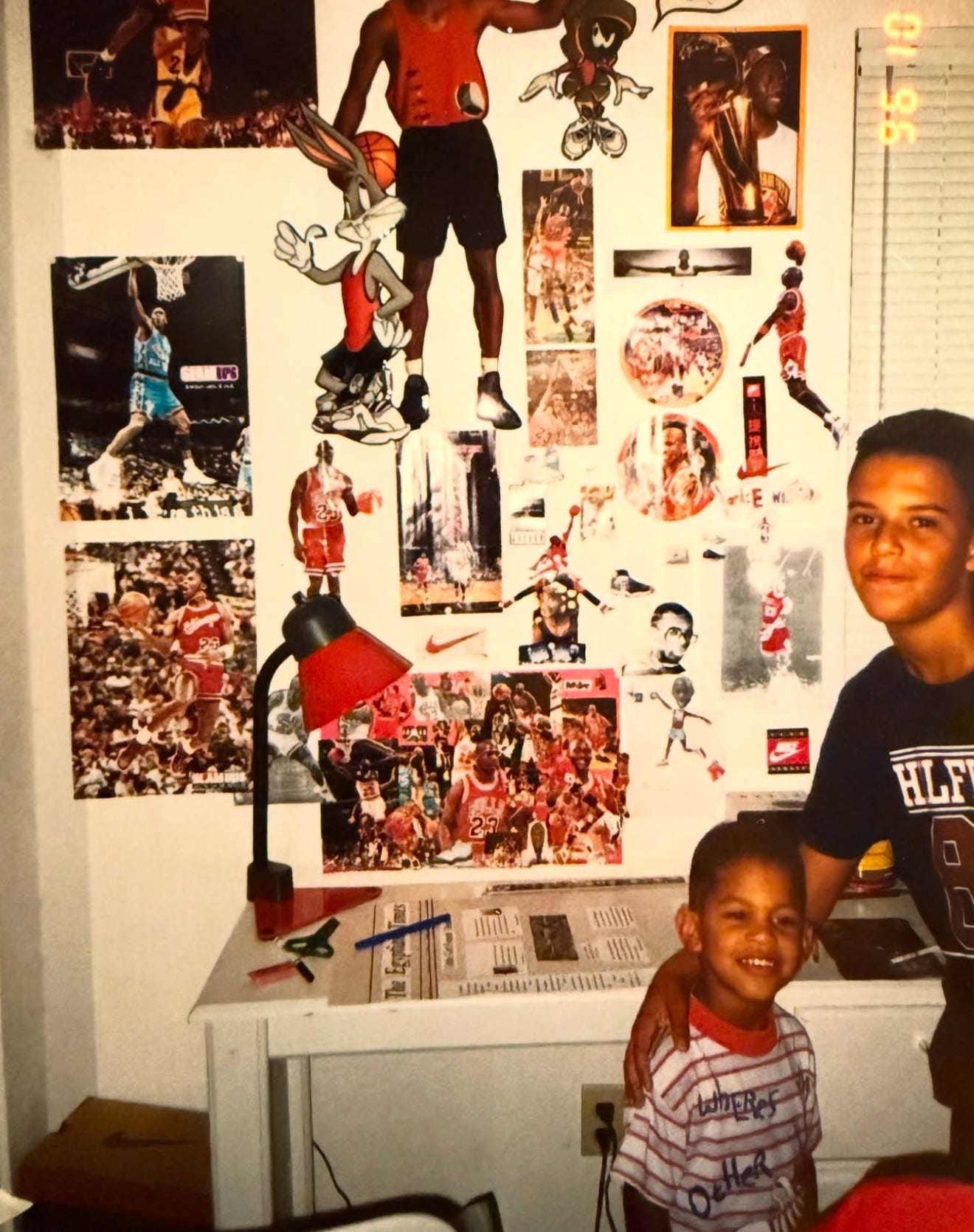
As a teen, you spent hours cutting out pictures of Michael Jordan and making massively intricate collages on your bedroom walls. Looking back, do you see those early “analog” experiments as the literal blueprint for the complex collage and key art you create today?
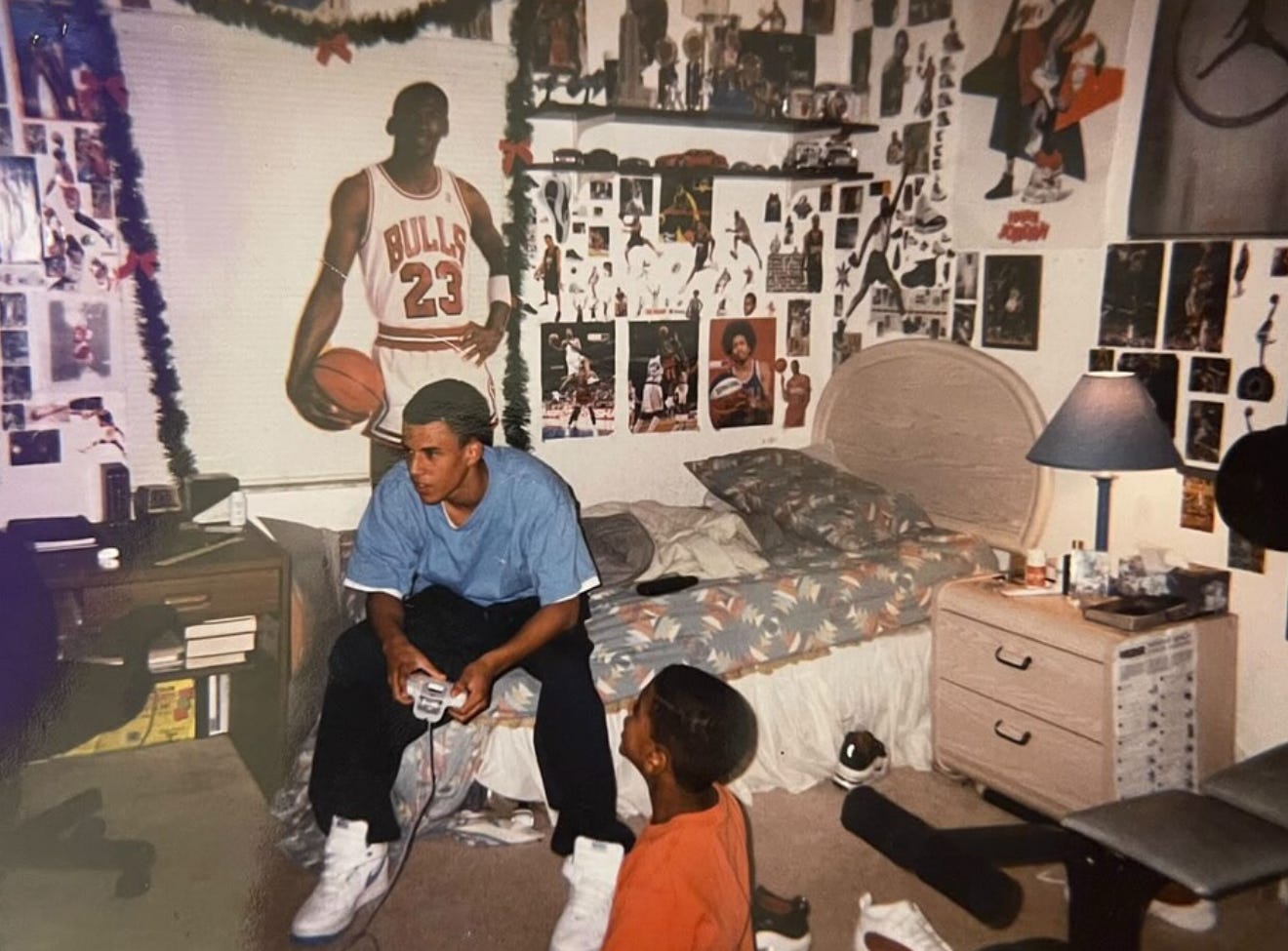
I recently saw a video on social media that said, “you become what you’re obsessed with,” and I can attest to that.
As a teenager, I was creating art inspired by what I was obsessed with at the time: MJ, Hip Hop, sneakers, and girls. Politics, race-relations, and social issues came later. But as a kid, I made very detailed collages and art that reflected those interests.
I also would spend hours drawing, mostly sneakers, while watching Spike Lee movies and listening to my favorite hip hop and R&B albums. I guess I was subconsciously planting seeds for what was to come.
I ended up making a living as a visual artist constantly inspired by what I was obsessed with as a kid. Go figure.
You attended Hampton University for graphic design but mentioned you weren’t focused at the time. How did that period of exploration, even without initial focus, eventually help you realize that art could be your professional “Hustle” rather than just a hobby?
I’m a true believer that what is meant for us calls us, but it’s up to us to answer that call. If you’re lucky, you won’t fumble what’s meant for you. We all get unfocused, especially when we’re young and think we know it all, but life has a funny way of humbling us all.
When I was at Hampton, I was having too much fun and doing everything except focusing on what I was there for. I was doing the most, and that’s all I really cared about. Wearing fly shit with money I should have been spending on books and chasing girls. Art was an afterthought. I wish I was more focused back then, but I also trust the process. Thankfully, I’m able to look back at that time with no regrets, even though I wasted a lot of time. I was just trying to live it up and be in the moment.
Luckily, I found my way back to my calling. It wasn’t until some years later and a failed attempt at art school that I realized I could monetize my creativity and make it a career. I carved out a lane for myself, and once I had that lightbulb moment, I never looked back.
“I thought Jordan’s and a Gold Chain was living it up” – Nas, “Street Dreams”
Chapter. II
The 2009 Pivot: You became a professional graphic designer in 2009 after losing your job and having to drop out of art school. How did that “no safety net” moment force you to sharpen your discipline and redefine what it meant to survive in the creative industry?
2009 was a mystical, enigmatic, and often dark time for me. I won’t go into too much detail, but it was definitely the sink or swim, fight or flight chapter of the Hero’s journey, especially after I lost my job. It was me living under constant uncertainty and fear, but also a healthy amount of excitement and living on the edge.
Again, I won’t go into detail, but it was my “Stay Dangerous” era LOL. It was also proof positive that never giving up actually works. I was basically living hand to mouth in a roach-infested studio apartment in NE Washington DC, and it was the defining moment of my early adulthood. In other words…shit got real.
I was often in a dark place during those times, but it’s always darkest before dawn. Somehow I navigated my way out of that, and after doing $30 club flyers for a few months, I slowly started to build a network of clients in DC and eventually the entire Northeast. I owe a lot to Washington DC and the surrounding DMV area. It’s where I was born and where I went back to and ended up starting my career there.
The momentum gained in DC carried me into a 15+ year career as a freelance visual artist and creative director. Looking back, it gives me chills reflecting on all of the obstacles I hurtled. There were so many ups and downs, but I never wavered.
The late, great Kobe Bryant once said, “Keep going, storms eventually end,” and they do. But best believe more storms are coming…
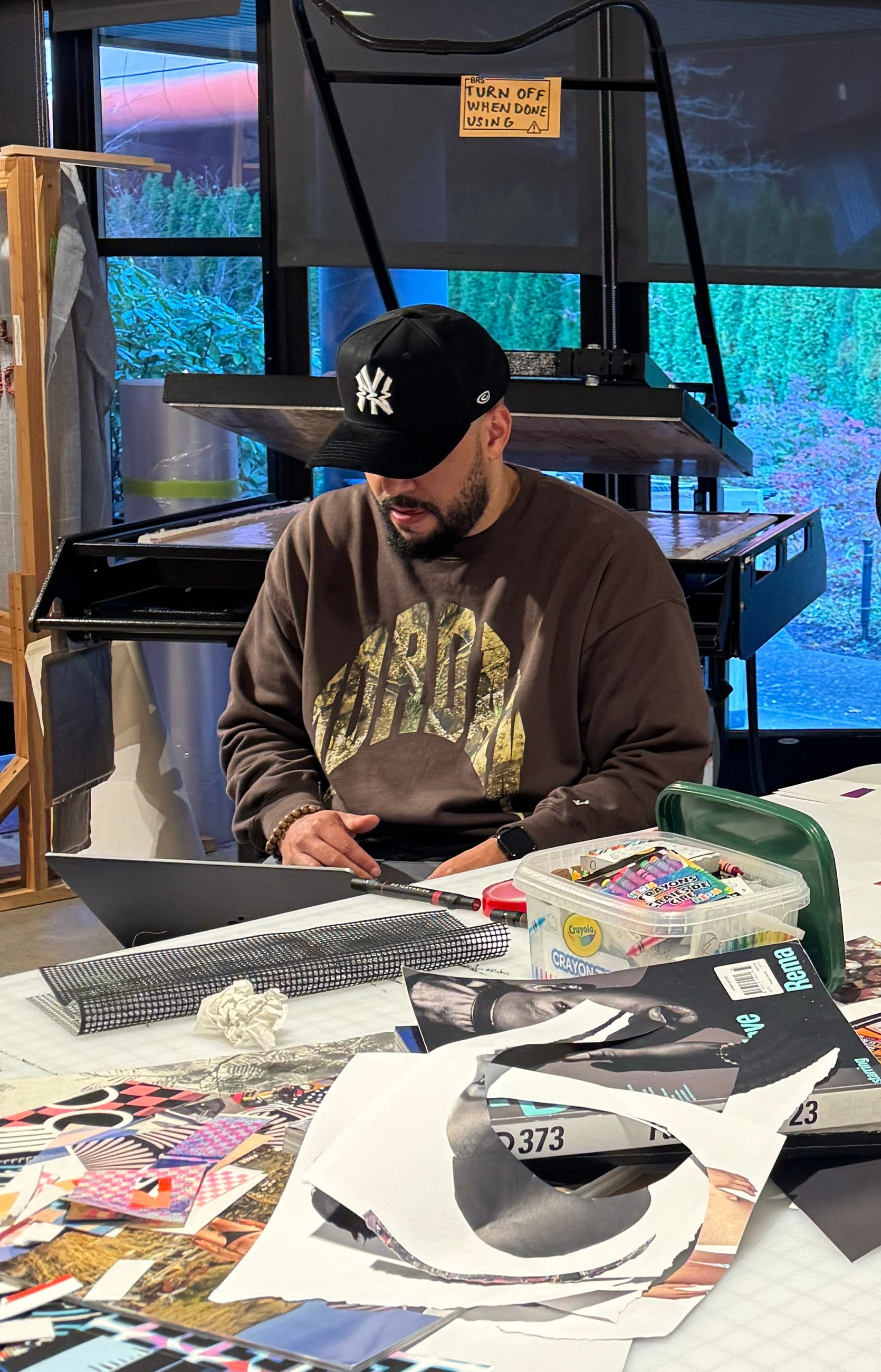
Bringing the Indie Mindset to Jordan Brand: Today, you serve as the Lead Graphic Designer for footwear at Jordan Brand. You’ve also worked with global titans like Spike Lee and Netflix. How do you maintain an independent, “disruptive” mindset when working inside the framework of a brand with such heavy historical reverence?
“No matter where you go, you are who you are, player.” – Jay-Z, “PSA”
I’ve had the great fortune of working with and for my creative heroes, mainly Spike and MJ. Who can say that!?? It’s crazy when I really think about it. But I dreamed it as a little kid and I made it a reality as a grown man. Yes, it was through hard work and perseverance, but also because I BELIEVED.
One of my mentors at the brand, Howard “H” White, Vice President of Jordan Brand, lives by the philosophy that if you believe something with enough conviction, you become that thing. I wanted to be a visual artist who paid attention to detail with historical accuracy and did things that were disruptive and thought provoking. I achieved it.
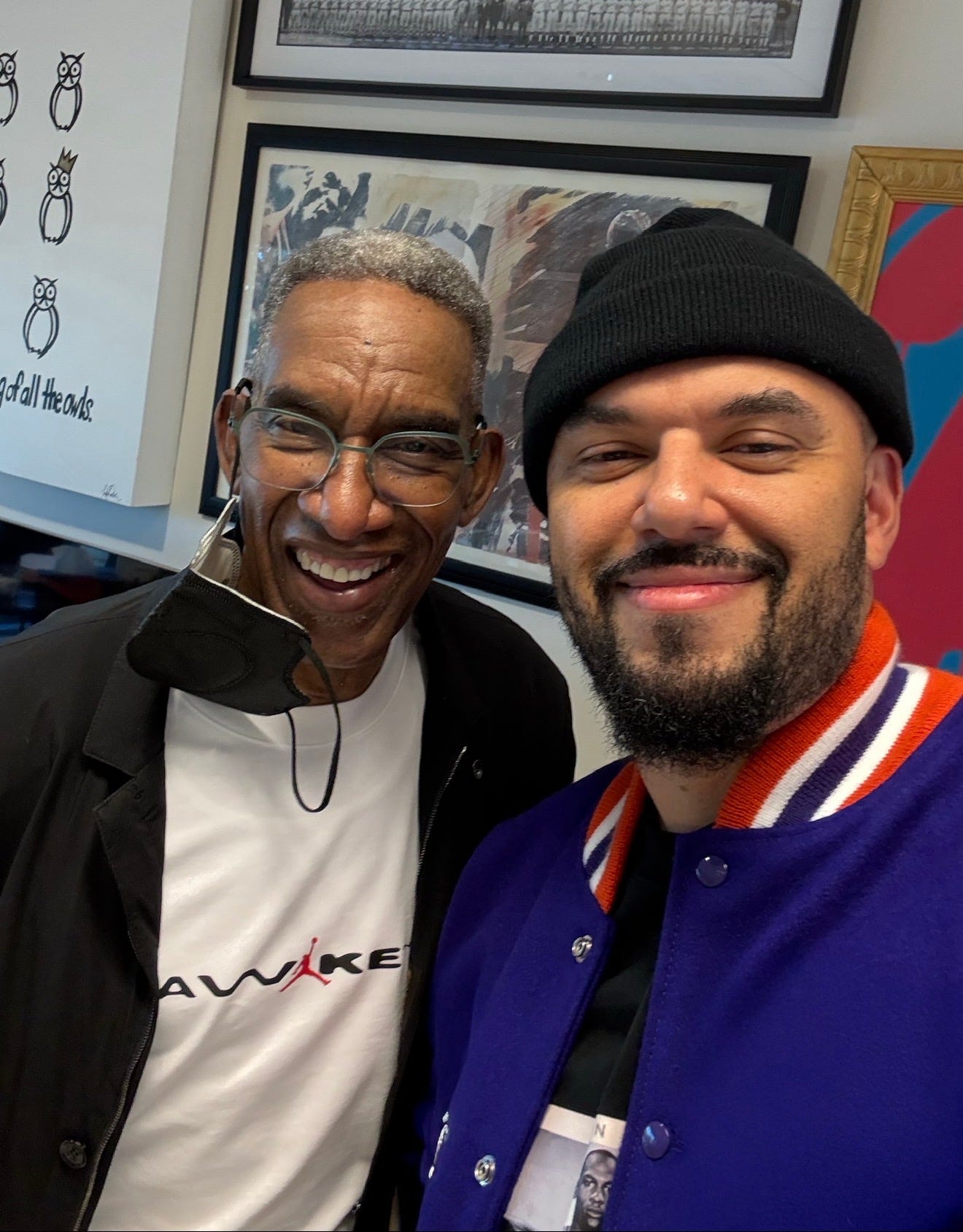
All of the things I loved and believed in and the cultural imprint left on me while growing up all made me who I am today. All the life experiences while living in different places all became the summation of who I was as a man and a creative.
So I show up to work every day in the Michael Jordan building here in Beaverton, Oregon as ME. The light-skinned kid who grew up in the 90’s idolizing Michael Jordan, Spike, Hip Hop. That Jay-Z bar resonates with me. You can’t fake who you really are. I’m eternally grateful to wake up every day, look in the mirror, and stay true to the kid who lives inside of me and the man staring back at me.
Chapter. III
You are now based on the West Coast first landing in Sacramento, CA and now based in Beaverton, OR, home of Nike World Headquarters. How does your East Coast “bred” intensity interact with the West Coast creative environment?
Having lived in Sacramento, CA for a decade, and for a short time in the Bay Area, it definitely left a major impression on me. It was also a bit of a culture shock, but because I’ve lived in a lot of places I learned how to assimilate quickly. I also had no choice because as soon as I got here I started a family. So I kinda hit the ground running.
Thankfully, I was embraced and became connected with some really dope people, and that made the transition a lot smoother. I embraced and deeply respect Northern California culture, but people knew as soon as I opened my mouth I wasn’t a local. Ha!
When you were a kid drawing in your room, there was no social media observation - no algorithms telling you what was “popular.” You developed your own style in that silence.
How do you see social media today? Is it a tool that helps artists reach their potential, or does the constant noise make it harder for this new generation to avoid just “riding waves”?
Honestly, I think it’s a little bit of both. It can be a blessing for artists but also a slippery slope if you don’t maintain some balance and restraint.
I personally owe social media a huge debt of gratitude. My career as an artist was amplified by social media. I’m not ashamed to say I met the mother of my children on socials and together we subsequently promoted our art and brands in an effort to monetize our platforms…and it worked!
But it can also be a major distraction and a dream killer (and relationship killer) if you let it. It’s hard to find balance in an imbalanced world, especially in the age of over-information, but it’s up to the individual to create that healthy space. That applies to most aspects of life honestly.
As far as social media goes, without sounding cliche, use it to your advantage because there are some real benefits to it, but don’t let it use you.
“Time is the only luxury. It’s the only thing you can’t get back.” – Kanye West
You’ve worked with a lot of clients that are very well respected and the list can go on but to mention a few Jordan, Nike, Netflix, Obamas, Sony, ESPN, Universal Music Group, Top Dawg Ent. , Rock The Bells, BET, Ray Allen, Brooks, Jetlife, Showtime, Drink Champs, Radio One, Coppertone, Snoop Dogg, Paper Planes.
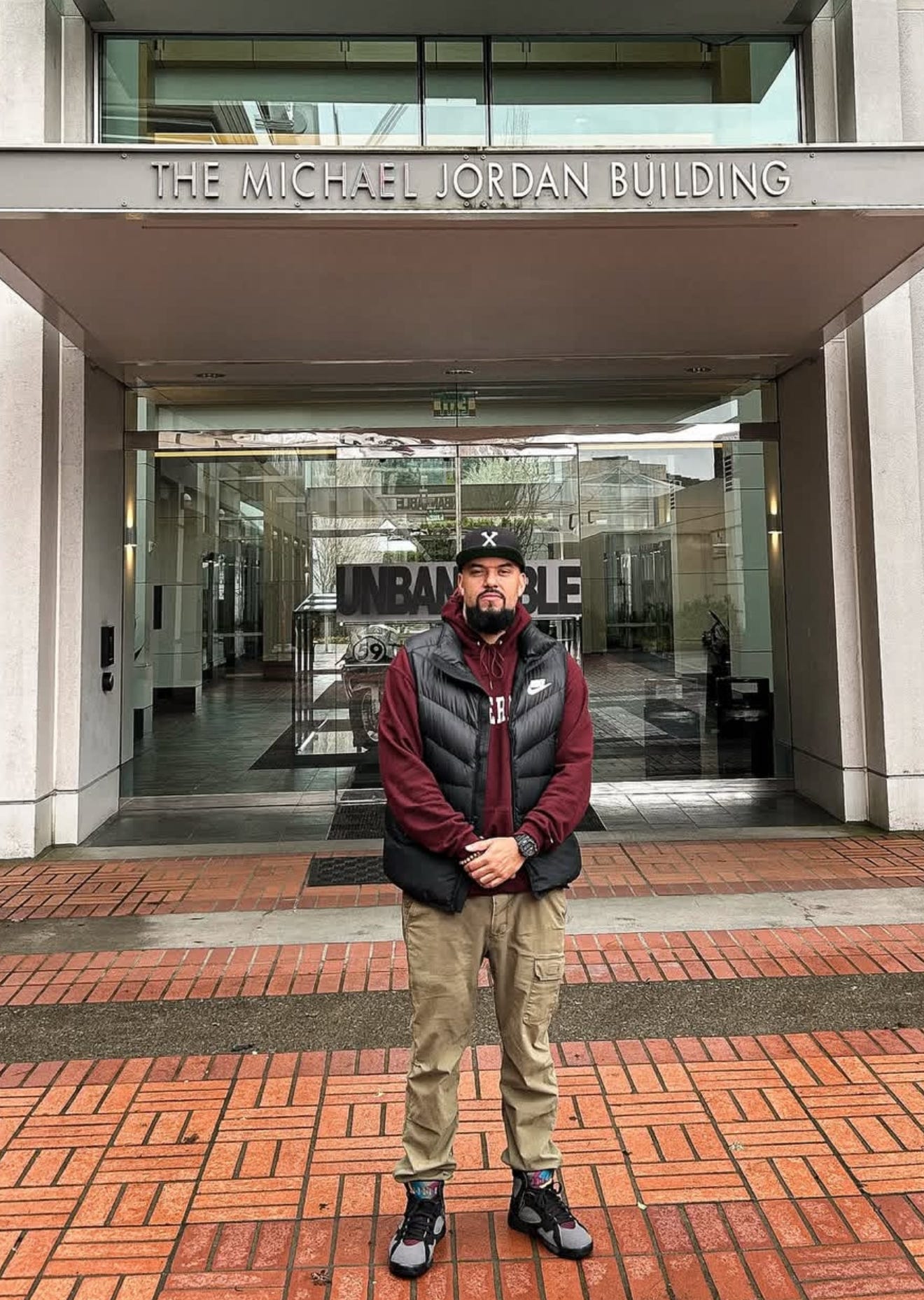
Do you ever drift away to 2009 when you lost your job and imagine the achievements and success you’ve reached just looking at the companies that have trusted you as a designer for them?
I often reflect on that time because it was definitely a turning point for me. I just didn’t know what was around the corner. In those early days of pursing my dreams, I often let fear fuel my passion. Fear of failure. Fear of not becoming anything worthwhile. Fear of being trapped in a miserable existence.
I was scared to death because I didn’t know what was coming, but I was supremely confident in my ability to create and to overcome anything. Common has a bar in his classic song “They Say” where he says, “I’m writing for my life cause I’m scared of a day job.” That was literally my existence. I was designing for my life because I was petrified of a 9-5.
The only job I could see myself working is the one I currently have now, at my favorite brand in the world. Beyond that, I only ever wanted to be an independent designer/visual artist and I was fortunate to do that for well over a decade.
If you had to pick three art pieces you’ve created over the years that have meant a lot to you personally - not necessarily the most popular ones, but those that made people stop and observe, and that made you feel you were onto something unique - what would they be?
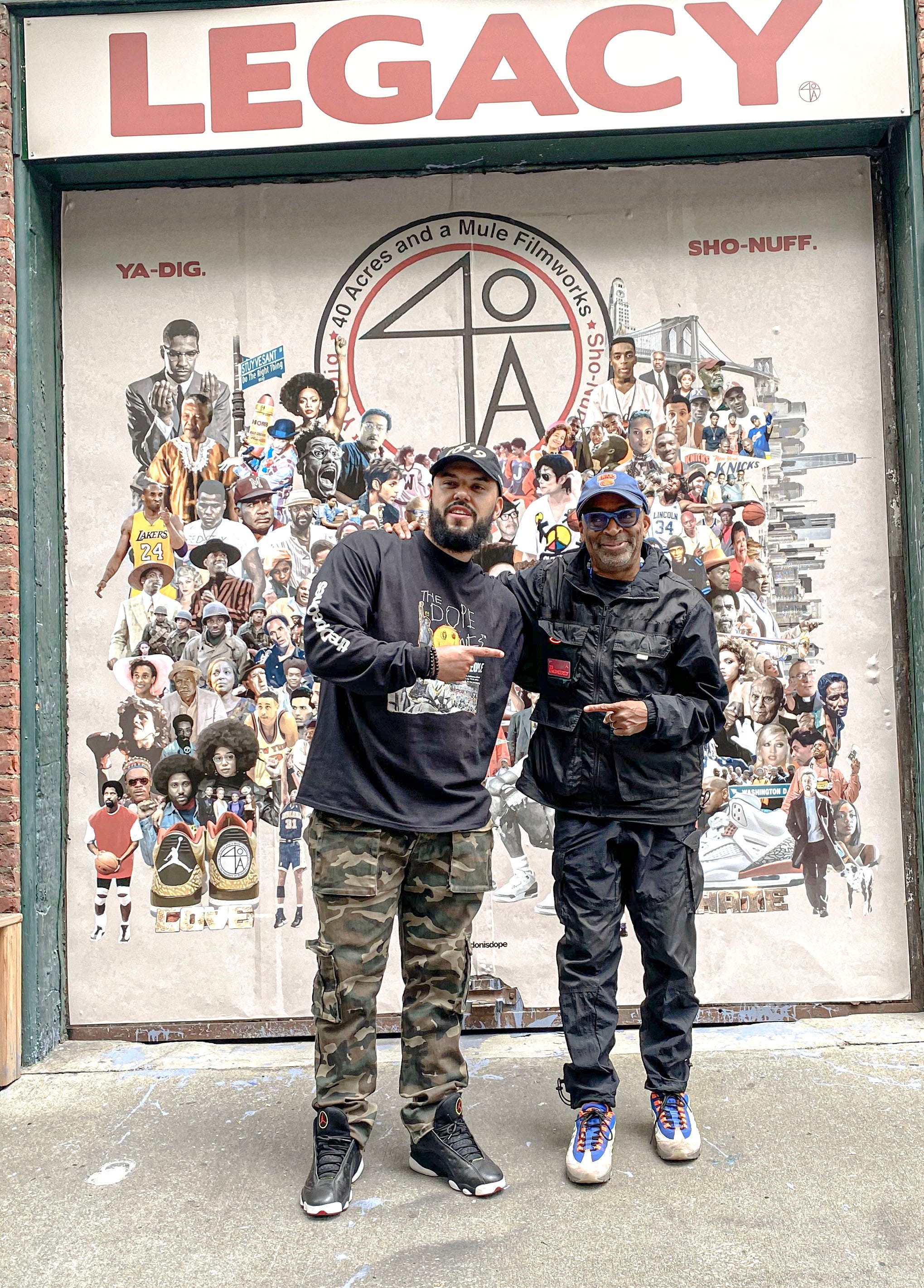
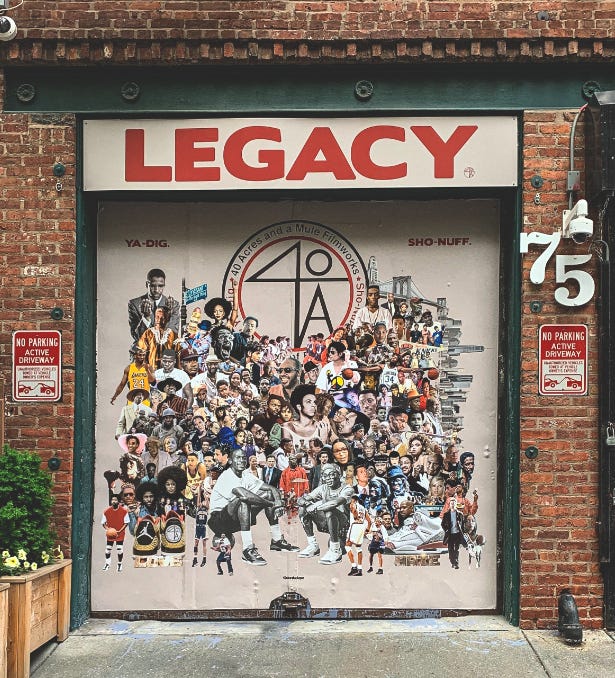
Therese so many, but if I had to pick three I’d say the first would be the “LEGACY” collage I did for Spike Lee which pays homage to his illustrious film career. It was on public display at the 40 Acres office for roughly 2 years and later at the Brooklyn Museum. It also forged a relationship between he and I which continues til this day. This piece changed my life forever.
Second, is an incredible project that I was lucky enough to work on when I initially got hired at Jordan Brand early last year. It was truly a dream come true to even get the job but this project is a bucket list kinda thing. I just can’t reveal what it is yet because it doesn’t come out until Fall of this year and I’d lose my job if I let the cat out of the bag early. But it’s worth the wait.
Third but certainly not least is a black and white portrait of Malcolm X that I painted in art school. It was so good my art teacher wanted to keep the original but for me it signaled a newfound confidence in my work and a potentially promising career in the arts. At the time I didn’t think it was gonna be as good as it turned out to be so I surprised myself. It taught me to approach very project with a healthy amount of LOVE. It’s paying homage to one of my all time heroes.
Chapter. IV
You’ve gone from being the kid who cut out Michael Jordan posters for his wall to the man designing the new designs that kids are now buying. Now that you’re a father of four boys, how has your perspective on the Jumpman changed?
My boys are without question my greatest achievement in life. Without them I’m nothing. They gave me direction and a true sense of purpose. My kids and their mom truly helped me understand and define what it means to LOVE. Living my dream and working for my favorite brand is just an amazing bonus. I do this for them as much as for me, if not more.
But I will say when you’re no longer just a consumer and you’re on the other side of the curtain, you see how much influence you can have over youth culture and how powerful brands like Nike and Jordan really are. I don’t take it lightly at all.
22-year-olds have never seen Michael Jordan play a basketball game in real time because they were born after he retired (the second time). But they still line up to buy his sneakers like I did at 22. It’s f**king mind-blowing. So I treat it with a great deal of care and intentionality because it’s an incredible, once in a lifetime opportunity.
The Jordan brand continues to be a powerhouse when it comes to creating designs that consistently connect with youth - driven by a strong vision and a dream. You are a prime example that it’s possible to go all the way, from working out of your childhood bedroom to doing what you’ve always dreamed of.
How do you and your team approach creating designs that connect with today’s youth?
Like I previously mentioned, it’s an opportunity of a lifetime, but what makes it even more significant is the fact that I work with a group of incredibly skilled and passionate people. We all bring a collective level of professionalism and pure love for the brand and the culture. It’s a true blessing to have amazing colleagues and comrades.
Many people think the philosophy behind Jordan Brand is to exemplify MJ’s unparalleled greatness on the court through product—and it is—but it’s also about believing in something greater than yourself to achieve your goals. I think it’s a beautiful message that we try to convey in each product. However, the thing I love the most about working for the brand of my boyhood idol is that it’s rooted in creativity, as stated by MJ himself:
“The Jumpman represents creativity”
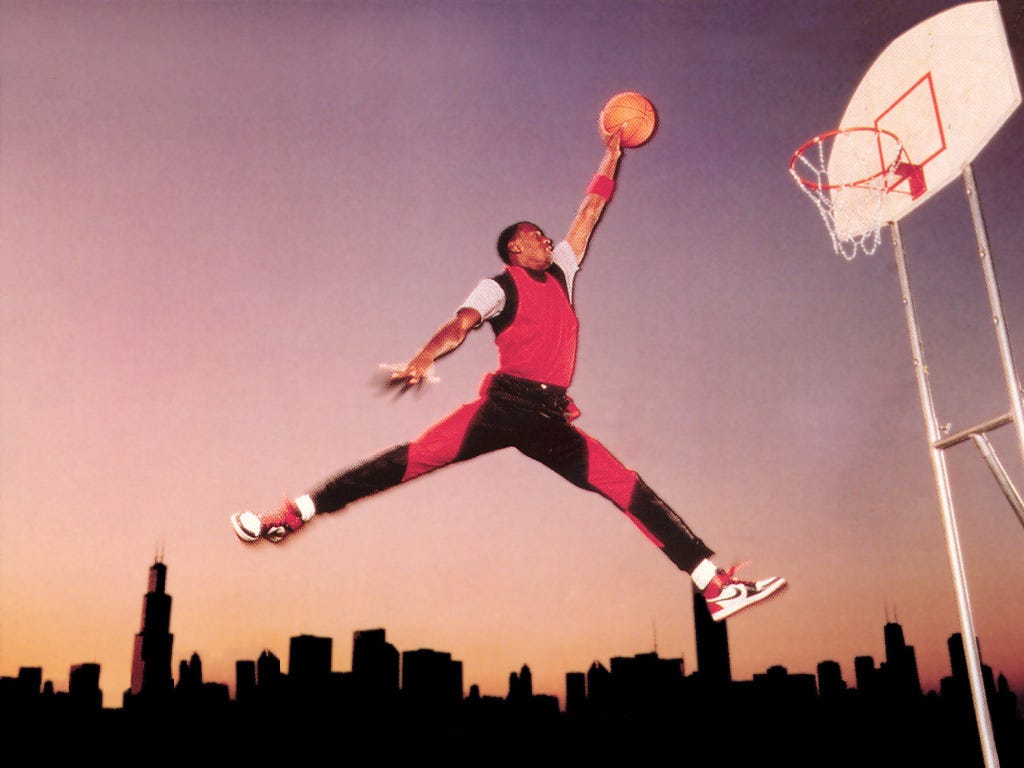
As a kid, before I wanted to be an artist, I had hoop dreams. I wanted to be a basketball player because Michael Jordan made the game look so good. He was poetry in motion.
Looking back, I realize by the time I became a true fan of Michael Jordan—which was around ’92, and he had just won his second ring and was on his way to winning his second gold medal in the Olympics-something was different. By then, MJ had already transcended from a basketball player to become a global icon.
But when I look back, he was more than a basketball icon-he was an artist, and I realize now that’s really why he became my hero. He was so good at what he did, basketball literally became performance art, and the court was his canvas. I wasn’t in the driveway practicing fundamentals, I was practicing reverse layups, double clutch jump shots, and fadeaways-doing my best MJ impression. I was enamored by the artistry, and I carry that with me today.
If I can inspire youth culture through the lens of MJ’s greatness, it will always be in the most creative way possible, and it’s not missed on me how lucky I am to be able to do that for a living.
“The highest human act is to inspire” – Nipsey Hussle